The Work
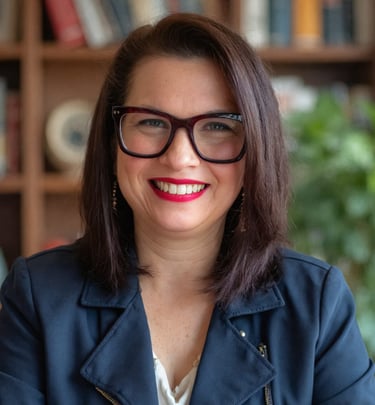
Sarah Kesher Consulting is, as the name implies, me—along with a trusted group of talented people I bring in as needed to complement and strengthen the work.
This structure is intentional. It keeps the practice nimble and flexible, allowing me to bring together the right mix of skills and expertise for the challenge at hand—without losing momentum, clarity, or accountability.
Even when others are involved, I stay closely connected to the work. Clients don’t get handed off, and responsibility doesn’t diffuse simply because additional expertise is brought to the table.
My Approach
I’m drawn to complex, people-centered challenges—the kind where the answer isn’t obvious, priorities compete, and smart people see the problem differently. That’s the work I’ve spent my career doing: helping leaders and organizations make sense of complexity, clarify what really matters, and move forward with intention.
I don’t come to this work with a single framework or a pre-baked solution. I listen closely, ask better questions, and connect ideas across contexts to help leaders see their situation more clearly. From there, the focus is always the same: creating clear, usable direction that can actually be acted on.
Progress doesn’t always require sweeping change. Often, it comes from strengthening what’s already working, clarifying what’s possible, and making thoughtful improvements that compound over time. Within real constraints, I’m always asking: How do we make this as good as it can be?
And none of that matters if people don’t adopt it. You can have the best strategy or plan in the world, but if it’s designed without considering how people will engage with it, it won’t go far. I adapt my style and approach to the context and the people involved—because that’s what makes progress stick.
Choosing the Right Tool for the Job
Over the years, I’ve worked across a wide range of disciplines—organizational development, learning and development, marketing, communication, product development, video and script writing, and graphic design.
While the contexts have varied, the thread has been consistent. In every role, the work centered on clarifying vision and direction—and then finding the best way to tell the story so it actually lands and creates the intended impact.
That range matters because it changes how I see problems. What looks like a learning issue is sometimes really a communication or packaging problem. What’s framed as a culture challenge may be structural or decision-related. And occasionally, what people think needs to be redesigned actually needs to be explained, experienced, or reframed.
Because I’ve worked across disciplines, I’m able to step back and ask a more fundamental question: What will best serve the goal here? From there, we can choose the right lever—rather than defaulting to the most familiar intervention.
Ways to Work Together
The work takes different forms depending on the challenge, the context, and what’s needed most in the moment. These focus areas aren’t discrete offerings so much as lenses I use to help organizations find clarity and move forward. Most engagements draw from more than one.
Culture & Alignment
Culture doesn’t change because values are stated or behaviors are named. It changes when leadership decisions, priorities, structures, and day-to-day actions begin to line up.
I work with leaders to surface what’s really shaping the culture today, clarify what alignment actually looks like in practice, and identify realistic ways to close the gap—without ignoring how the organization actually operates.
This work may include:
Clarifying cultural aspirations and shared expectations
Leadership alignment and decision-making norms
Identifying structural or systemic misalignment
Designing practical actions that reinforce desired behaviors over time


Organizational Development
Organizational development is rarely about fixing people. More often, it’s about clarifying roles, strengthening systems, and creating the conditions for people to do their best work together.
I help organizations step back and look honestly at how work is getting done today—then identify what needs to shift so teams can operate more effectively, especially as the organization grows or changes.
This work may include:
Organizational and team effectiveness
Role clarity and operating norms
Leadership and talent development
Supporting organizations through periods of change


Strategy into Action
Many organizations have sound strategies that stall once execution begins. Agreement at the top doesn’t automatically translate into shared understanding, ownership, or follow-through.
I help leaders turn strategy into usable direction—clarifying priorities, making tradeoffs visible, and translating high-level intent into decisions people can actually act on.
This work may include:
Strategic planning and alignment
Facilitating leadership and executive team conversations
Translating strategy into clear priorities and actions
Supporting implementation without over-engineering the solution


Strategic Communication & Sensemaking
Strong ideas don’t go far if people can’t make sense of them. Whether the audience is a board, a leadership team, or the broader organization, how information is framed and shared matters.
I help leaders and teams clarify the core story they need to tell—then choose the right format to make it land. Often that means simplifying, restructuring, or reframing complex ideas so people can understand them, remember them, and act on them.
This work may include:
Leadership and executive communication
Strategic narratives and messaging
Presentations and facilitation for complex topics
Using story, visuals, and scenarios to support understanding


How the Work Works
Most engagements draw on at least one, usually a combination, of these elements.
Finding the real problem. I dig into what's actually going on—not just what I think it might be—before identifying and designing solutions.
Building a plan that holds up. What I find turns into strategies, priorities, and direction that not only address the need, but also sync with how your organization actually operates (so they actually work).
Designing what actually fits. I may draw on tried and true techniques and models, but I don't do straight off-the-shelf solutions. Instead, I develop something shaped by constraints, your culture, and your people.
Helping leaders lead, and teams work better together. I stay in it as advisor and thinking partner as the plan is put into practice—not handing off a plan and disappearing.
The work ends. The relationship doesn't.
What Clients Value
Clients tell me they value having a thinking partner who can hold the big picture without losing sight of practical realities, ask the questions others avoid (without judgment), and help turn complexity into clear direction and next steps.
Clients value having a thinking partner who can help them choose the right lever—not just the most obvious one.
I’m not interested in staying in the abstract—or in moving so fast that the real problem never gets addressed. The work lives in the space between those two extremes, always focused on solving the actual, underlying problem.
Are we right for you?
This work is a good fit for leaders and organizations willing to think honestly, engage complexity, and act on what they learn.
It can also be valuable in shorter, focused engagements—such as introducing new ideas or ways of thinking through a one-day session or facilitated conversation. In those cases, the goal is awareness, shared understanding, and a strong starting point—not a shortcut to deep skill-building or lasting change.
It’s less helpful for those looking for a quick fix, a plug-and-play solution, or someone to simply validate a decision that’s already been made.